







New research has found that almost half of the tampon products tested leached chemicals with oestrogen-like activity, raising new questions about chemicals in tampons, menstrual product safety and whether current tampon regulation goes far enough.
If you use tampons, this is research worth knowing about.
A new study from researchers at the University of Otago in New Zealand tested 18 commercially available tampon products from multiple brands and countries.
The result?
Eight of the 18 tampon products tested — 44% — showed detectable oestrogenic activity.
Both synthetic and organic tampons were among the products that tested positive.
The researchers found that compounds capable of activating oestrogen receptors could leach from some tampons under laboratory conditions. Importantly, other tampons tested showed no detectable oestrogenic activity at all.
The research does not prove that tampons are unsafe or that using tampons causes hormonal health conditions.
But it does raise an important question:
Why aren't menstrual products routinely tested for their potential impact on our hormones?
What did the new tampon study find?
The study, titled Estrogenic Activity in Tampon Products, was published in the Journal of the Endocrine Society in 2026.
The research was conducted by Emma S. Sutherland, Gihani Manodara, Ashley Gillon, Kelsey L. Stevens, Alexia Kauff and senior author Professor Alison K. Heather.
Professor Alison Heather is from the University of Otago Department of Physiology and is also Chief Scientific Officer of biotech company InsituGen.
The researchers tested 18 unique tampon products representing 13 brands. The products included different materials, product lines and absorbencies, with tampons originating from countries including Australia, New Zealand, the United States and countries across Europe.
The study found detectable oestrogenic activity in 8 of the 18 tampon products tested.
That is 44%.
And the results were not as simple as “synthetic tampons are bad and organic tampons are safe”.
Both synthetic and organic tampons showed detectable oestrogenic activity. Both synthetic and organic tampons were also found with no detectable activity.
This suggests the issue may be more dependent on individual brand formulations, manufacturing processes and chemical profiles than simply whether a tampon is labelled “organic”.
What are endocrine-disrupting chemicals?
Endocrine-disrupting chemicals, often called EDCs, are chemicals that can mimic, block or alter the signalling of the body's natural hormones.
Our hormones help regulate an enormous range of processes in the body, including:
- menstrual cycles
- reproduction
- fertility
- metabolism
- development
- mood
- pregnancy
Some endocrine-disrupting chemicals can act like oestrogen in the body or interfere with normal hormone signalling.
According to the University of Otago, these chemicals are increasingly being linked to reproductive and hormonal health effects. Professor Heather explained that endocrine-disrupting chemicals can interfere with the body's natural hormone signalling, creating hormonal imbalance.
The wider scientific literature has linked exposure to some endocrine-disrupting chemicals with reproductive and hormonal health concerns, including endometriosis, uterine fibroids, disrupted menstrual cycles and increased breast cancer risk.
However, it is important to be clear: this study did not find that using tampons causes these conditions.
The researchers measured low levels of oestrogenic activity in vitro — meaning in a laboratory setting — and said we do not yet know what these findings mean for real-world health outcomes.
More research is needed.

What chemicals were found in the tampons?
The researchers compared the chemical profiles of one tampon with detectable oestrogenic activity and one without. Using high-resolution mass spectrometry, they tentatively identified a range of chemicals present at higher concentrations in the tampon with oestrogenic activity.
These included:
- plasticisers
- surfactants
- fragrance and scent-masking agents
- lubricants and emollients
- phthalates
- alkylphenols
Some of these chemicals are known or suspected endocrine-disrupting chemicals.
The researchers noted that tampon manufacturing can involve functional agents to improve flexibility, fluid absorption, comfort and product performance. But the question is whether the chemicals used in products that spend hours in direct contact with vaginal tissue should be more thoroughly assessed for endocrine-disrupting activity.
We think that is a very fair question.
Why does this research matter?
Tampons are not a product we use once. Many people insert them inside their bodies for hours at a time, every month, across decades of their lives.
As Professor Heather told the University of Otago, “Safety testing of tampons has historically focused on absorbency, irritation, and infection, rather than their impact on hormones.”
That is the part we cannot stop thinking about. Because when a product is used internally, repeatedly and over a significant portion of a person's life, we believe people deserve to know more about what is in it and how it has been tested.
We don't know what we don't know. But research like this gives us the opportunity to start asking better questions.
Does this mean tampons are unsafe?
No. This study does not prove that tampons are unsafe. The researchers themselves are very clear about this.
The oestrogenic signals detected were low and were measured in vitro. The researchers do not yet know what these results mean for real-world health outcomes. Professor Heather described the study as a starting point and called for further research, greater transparency and more comprehensive safety testing of menstrual products.
But there was also an encouraging finding-
More than half of the tampon products tested showed no detectable oestrogenic activity.
As Professor Heather said, “The fact that some tampons tested showed no detectable estrogenic activity tells us safer formulations are entirely achievable.”
This is important. The research is not saying that every tampon contains hormone-disrupting chemicals. It is showing that there were clear differences between the products tested. And if some tampon manufacturers can make products with no detectable oestrogenic activity, it is reasonable to ask why this cannot become a higher standard across the entire industry.
Were Australian tampons included in the research?
Yes.
The published research included tampon products originating from Australia. Two Australian tampon products listed in the study showed detectable oestrogenic activity. However, the researchers did not publicly identify the brands by name in the published study.
This means consumers cannot use the research to determine which specific tampon brands tested positive or negative. And this brings us to the issue of transparency. People deserve clear information about the products they put inside their bodies.
How are tampons regulated in Australia?
Tampons are regulated in Australia — but the way they are regulated may surprise you.
According to the Therapeutic Goods Administration (TGA), tampons are classified as exempt goods. This means tampons do not require an entry in the Australian Register of Therapeutic Goods (ARTG) and do not require assessment by the TGA before being supplied in Australia.
To be legally sold in Australia, tampons must still comply with relevant Australian safety and manufacturing standards. The current Australian tampon standard includes requirements relating to areas such as:
- packaging
- labelling
- performance
- absorbency
- microbial content
- withdrawal cord strength
- water repellence
Tampons must also meet requirements around materials, toxic or irritant effects and impurities. These requirements matter. But the new University of Otago research raises a different question:
Should menstrual product safety testing also specifically assess endocrine-disrupting activity?
Professor Heather and her fellow researchers believe regulatory guidance should be updated so menstrual products are evaluated not only for microbiological safety and irritation, but also for endocrine-related effects.
We agree that this conversation is long overdue.
Why don't tampon brands have to disclose every ingredient?
For decades, people have been expected to trust that major period care brands are making products that are safe to use. But how much do we really know about the materials, processing agents, additives and other chemicals involved in making the products we put inside our bodies?
The tampon study itself notes that functional agents can be used during manufacturing, including plasticisers, surfactants, fragrances, deodorants, lubricants and emollients. The researchers specifically called for better transparency around menstrual products.
And this matters because consumers cannot make truly informed choices if they do not have access to the information they need. Period care should not rely on blind trust.
Organic tampons aren't necessarily the answer
One of the most interesting findings from the study was that organic tampons were not automatically free from detectable oestrogenic activity. Some organic tampons tested positive. Some did not.
The same was true for synthetic tampons. This means choosing a product labelled “organic” may not tell you everything you need to know about its complete chemical profile or potential oestrogenic activity.
Again, the results appeared to vary by product and brand. This is exactly why better testing and greater transparency matter.
So, what can you do?
First, don't panic.
This research does not prove that tampons are causing harm to your body. But you are allowed to ask questions and you are allowed to read the research.
You are allowed to look more closely at the products you use. And you are allowed to decide that you want another option.
Reusable menstrual products, including menstrual discs, menstrual cups and period underwear, give people more choices in how they manage their periods.
The right period product will always be personal. But having access to information — and having real options — matters.

Why we created Hey Zomi
Hey Zomi was created by us, two sisters who believed period care could be better.
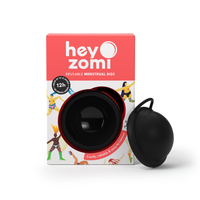
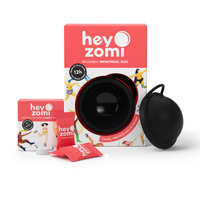
We wanted a reusable period product that was comfortable, convenient and made with materials we could feel confident putting inside our bodies. The Hey Zomi reusable menstrual disc is made from medical-grade liquid silicone rubber and is designed to be worn internally for up to 12 hours. It is suction-free, reusable for years and designed to give people another option beyond disposable pads and tampons.
We believe period care brands should actually care about what people put inside their bodies. We believe people deserve transparency. We believe better research should lead to better products. And we believe the period care industry should always be held to a higher standard — not the bare minimum.
The bottom line: we don't know what we don't know
For generations, women and people who menstruate have been expected to accept the period products available to us.
Use them. Trust them. Don't ask too many questions.
But research is changing and our conversations are changing.
And our expectations should change too. This new research does not tell us that all tampons are unsafe. What it does tell us is that almost half of the tampon products tested showed detectable oestrogenic activity in a laboratory setting — while others showed none.
That difference matters, as it shows us that better formulations are possible. It shows us that more research is needed. And it gives us every reason to keep asking questions.
Because we don't know what we don't know. But once we know more, we can demand better.
And period care should be better. Period.

Sources and further reading
University of Otago: Tampons tested for hormone disrupting chemicals
Published research: Estrogenic Activity in Tampon Products, Journal of the Endocrine Society
Therapeutic Goods Administration: Tampons and menstrual cups
Therapeutic Goods Administration: Manufacturing or supplying tampons
Disclaimer: This article is for general educational purposes only and is not medical advice. The study discussed measured oestrogenic activity under laboratory conditions and did not establish that tampon use causes hormonal or reproductive health conditions.